








Senate body submits recommendations on Federal Budget 2026-27
ISLAMABAD, June 17 (EPI): The Senate Standing Committee on Finance and Revenue, chaired by Senator Saleem Mandviwala has successfully concluded its extensive review of the Finance Bill 2026-27 and the Annual Budget Statement for Fiscal Year 2026-27, laid before Parliament under Article 73 of the Constitution of Pakistan.
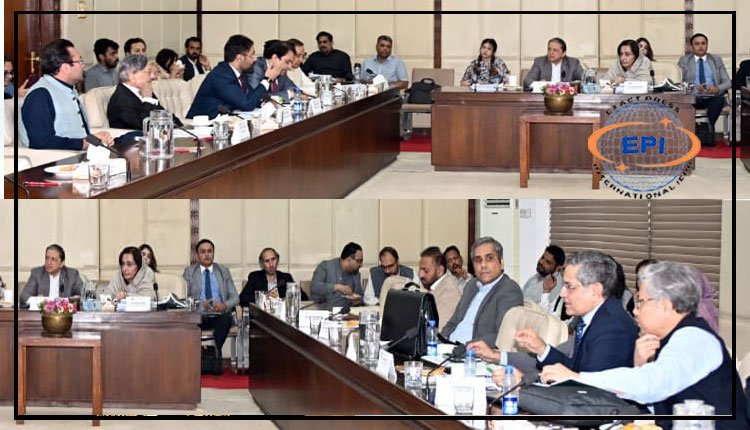
Over five consecutive sessions held at Parliament House, the Committee undertook a detailed clause-by-clause scrutiny of the Finance Bill, examining proposed amendments relating to the Customs Act, 1969, Sales Tax Act, 1990 and Income Tax Ordinance, 2001 alongside broader fiscal, trade, industrial, revenue and economic reform measures.
The Committee’s deliberations were attended by Federal Minister for Finance and Revenue Senator Muhammad Aurangzeb, Minister of State for Finance Bilal Azhar Kayani members of the Committee, senior officials of the Federal Board of Revenue (FBR), representatives of relevant ministries, industry stakeholders, business organizations and sectoral experts.
As part of its constitutional oversight role, the Committee carefully reviewed budgetary proposals affecting taxation, customs administration, digitalization of tax systems, industrial competitiveness, exports, investment promotion, economic documentation, tariff reforms and revenue generation.
The Committee engaged extensively with government institutions and stakeholders to ensure that fiscal measures remain balanced, transparent, growth-oriented and aligned with national economic priorities.
Throughout the proceedings, members emphasized the importance of policy consistency, predictability, evidence-based decision-making and broad stakeholder consultation in strengthening economic confidence and supporting sustainable growth.
The Committee examined and made recommendations on a wide range of proposals, including reforms aimed at improving customs clearance procedures, enhancing taxpayer facilitation, strengthening digital tax administration, expanding the tax base, encouraging documentation of the economy, supporting exporters, promoting industrial growth and improving regulatory efficiency.
Special attention was given to measures designed to reduce unnecessary procedural delays, improve transparency, encourage investment, facilitate legitimate businesses and strengthen revenue administration through technology-driven solutions.
The Committee also reviewed proposals relating to trade facilitation, tariff rationalization, social and economic sectors, emerging digital businesses, financial services and public welfare considerations.
Following comprehensive deliberations, the Committee finalized and approved its recommendations on the Finance Bill 2026-27 for submission to the Senate.
The recommendations reflect the Committee’s commitment to strengthening parliamentary oversight, improving fiscal governance, supporting economic stability and contributing constructively to the formulation of a sustainable and inclusive national budget. Ends-EPI